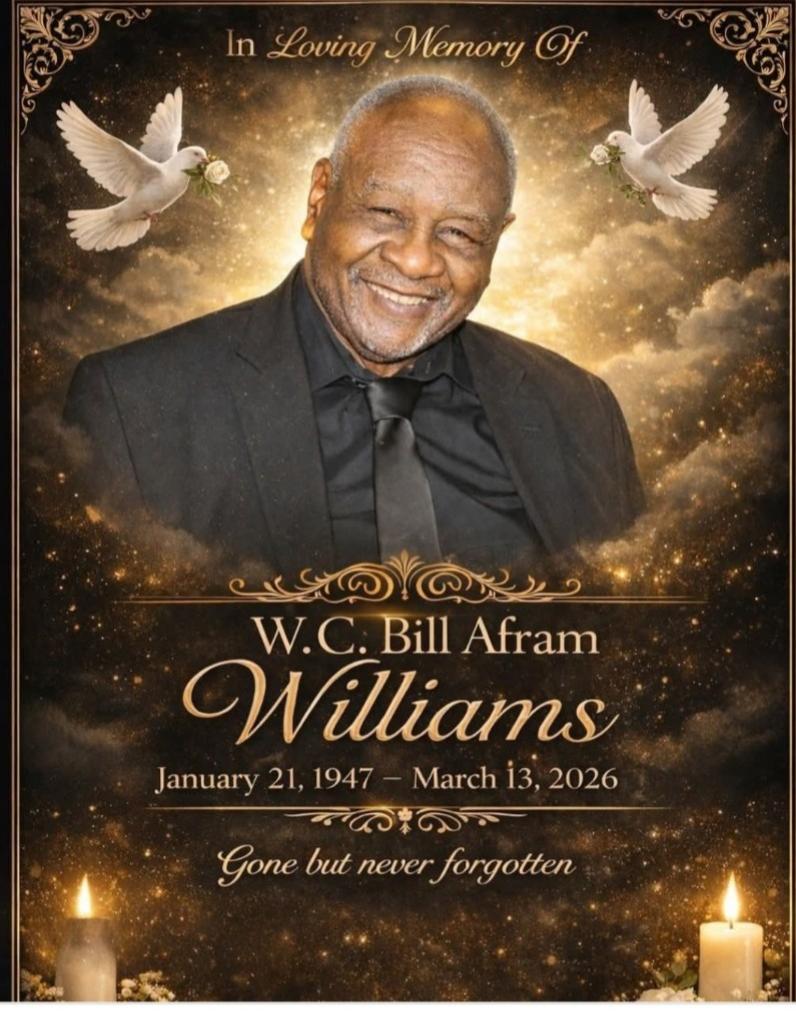
William C. Williams was born in Minter City, Mississippi on January 21, 1947. After surviving and escaping the terrors of the Jim Crow South that included time in a Mississippi prison camp, he moved as a teenager to Chicago, Illinois, where he built a life centered on hard work in many types of jobs, maintaining and broadening family and social connections, and growth in all spheres of his life.
As an actor and writer, he was known as afram bill williams. On social media, he was known as Wc and Bill. Bill and I became online friends in 2016, initially because of a shared interest in music—specifically, the music of Neil Young! It was a cousin of mine who first introduced us. After I made a few videos covering Neil Young songs, I was surprised and delighted that Bill was my biggest fan.
As time went on, we discovered that we were fellow writers, and we began to encourage each other’s work. The depth of thought and emotion in Bill’s work astounded me, as he was so quiet and centered (“reserved” is not an accurate description) in his writings and Facebook posts. In 2022, I was proud to feature three of Bill’s poems in one of my Black History Month posts on this blog [https://baltimoreblackwoman.com/2022/02/05/black-history-month-2022/].
More recently, Bill asked me to read an early draft of an autobiographical story he had written about his youth in Minter City, Flying Kites. I loved it! Though I am years younger than him and have always lived in Baltimore, there was so much that I could relate to: hanging out with friends, listening to the radio, getting into and out of scrapes with family, friends, and even “the law.” I was thrilled to follow the evolution of Flying Kites from a story to a play that Bill planned to produce. He held fundraisers and rehearsals of the play, and he continued to revise it.
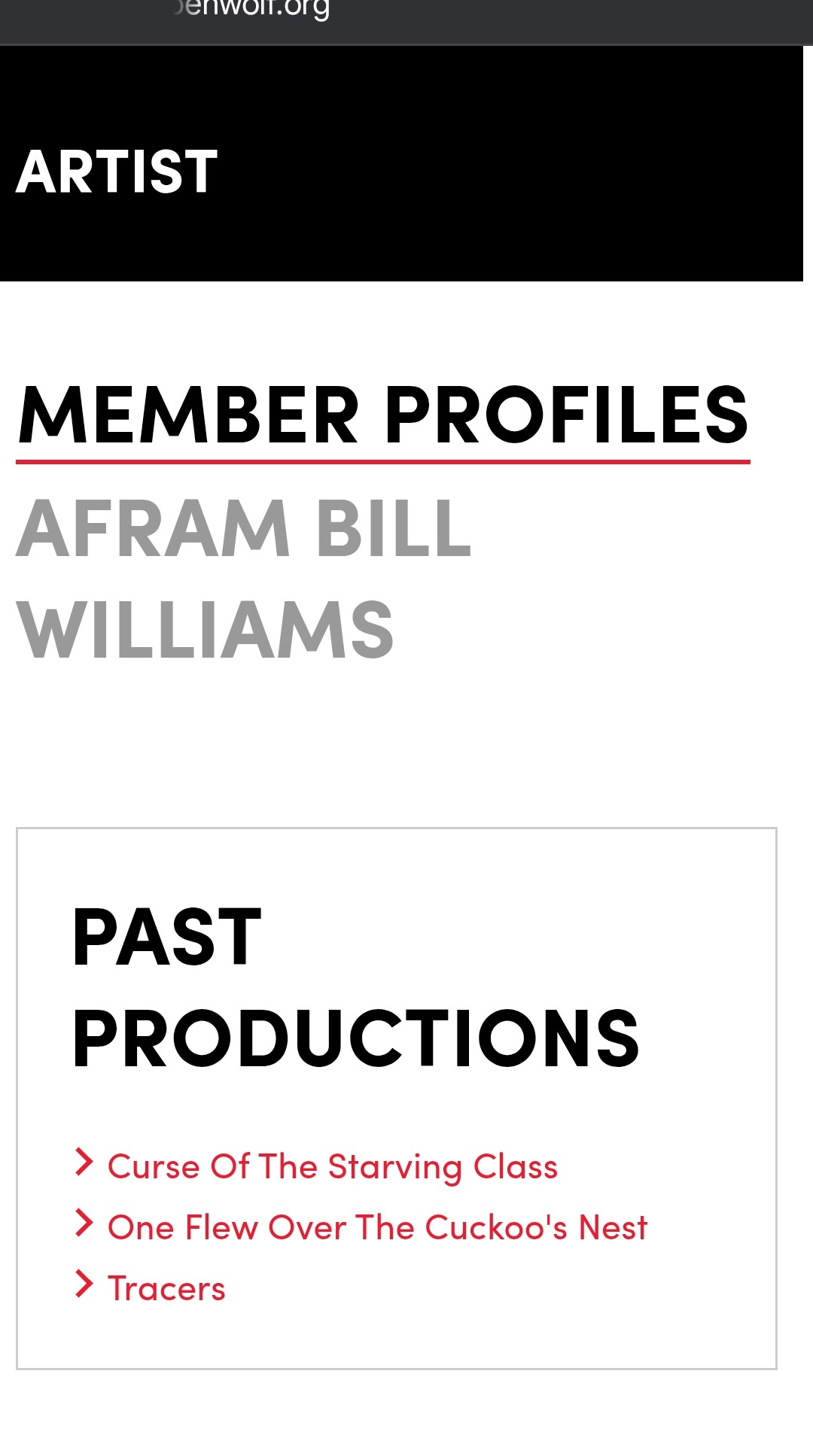

I’m not sure when I learned that Bill was also an actor. His film credits were Flatliners (1990), The Fugitive (1993), and Chain Reaction (1996). Bill did not attain A-list status as an actor, but I don’t know that stardom was his ultimate goal. He was more focused on honing his craft. As a member of the Steppenwolf Theater in Chicago (https://steppenwolf.org), he worked with the likes of co-founder Gary Sinise, Dennis Cole, and Dennis Farina in a production of “One Flew Over the Cuckoo’s Nest.” His other Steppenwolf credits were “Curse of the Starving Class” and “Tracers.” He also spoke fondly about having worked with John Mahoney on stage.
In his Facebook posts, Bill often expressed his deep devotion to his family—especially his wife of 32 years, Lydia, and his children, grandchildren, aunts and uncles, and cousins. He was also devoted to his many friends—both his life-long, real-world friends and his many online friends. Equally important was his spiritual family at Hopewell Baptist Church in Chicago, where his Funeral Service will be held on March 28, 2026.
What impressed me most about Bill were his quiet assurance which was strengthened by his faith, his humility, and his openness to the best that life can offer, no matter what problems or trials might come his way. Bill’s life exemplifies my own credo as a person and as a writer: The Black Experience IS The Human Experience.
I am grateful for Bill’s friendship and his positive influence on my life.
Rest in Peace, my Brother.
 baltimoreblackwoman